A lot of what we dream of is hard to accomplish, and not worth it. We will likely never be happy once we get that "thing", we only think we will. For me it has been many things ranging from getting into university, to having a scientific publication, to a sub-40 10k, to an Ipad. I have realized that nothing really changes, the attainment of one thing just makes you want the next thing. That is us, it is our nature, it is our society, whatever it is, it is. There is an inherent problem with this, and tons written about it. But what I want to write about today is the benefits of sticking to it. The problem is not really in what we want- it is in how fast we want it. We want things conveniently and quickly. Most things that are worth having, do not come easy, we often have to stick with it. While tales of perseverance make great stories they are not great in the moment. Imagine bombing that 44th interview, or sending out that 200th application. Its tough- but we owe it to ourselves to stick with it. Trust and enjoy the process because the end will likely not make you happy anyways. This is kind of a gift now don't you think?!
Saturday, January 12, 2019

Thursday, January 10, 2019
It's all about character
Watch your thoughts, they become your words.
Watch your words, they become your actions.
Watch your actions, they become your habits.
Watch your habits, they become your character.
Watch your character, it becomes your destiny
A poster with these words was in my room for many years and now resides at my old workspace in the action and attention lab at the University of Toronto. I really appreciate the larger message of the poster- not only is character important, but your character is a compilation of a series of little events. Lots of self-help books that tell you this type of thing. Over the past year, I was tricked into reading a lot of them: The Subtle Art of not Diving a Fuck, Living Eyes Wide Open, Spark, Deep Work and many others. I didn't like any of them- although they were entertaining and I definitely see why people like the stories in them. What these books fail to mention, or only mention superficially, is that an incremental approach to self-management is the best approach to changing or maintaining your best behaviours. Constantly monitoring and ensuring that you win the small battles with your thoughts and words is tough, but in the end these little victories will add up over time. I like this idea, and I think that's why I like the poster.
Watch your words, they become your actions.
Watch your actions, they become your habits.
Watch your habits, they become your character.
Watch your character, it becomes your destiny
A poster with these words was in my room for many years and now resides at my old workspace in the action and attention lab at the University of Toronto. I really appreciate the larger message of the poster- not only is character important, but your character is a compilation of a series of little events. Lots of self-help books that tell you this type of thing. Over the past year, I was tricked into reading a lot of them: The Subtle Art of not Diving a Fuck, Living Eyes Wide Open, Spark, Deep Work and many others. I didn't like any of them- although they were entertaining and I definitely see why people like the stories in them. What these books fail to mention, or only mention superficially, is that an incremental approach to self-management is the best approach to changing or maintaining your best behaviours. Constantly monitoring and ensuring that you win the small battles with your thoughts and words is tough, but in the end these little victories will add up over time. I like this idea, and I think that's why I like the poster.
Wednesday, January 9, 2019
To all my libraries around the world...thank you
Libraries are cool places to visit. When I started biking around Toronto in 2013, I would stop into libraries often. They have heating in the winter, air condition in the summer and a quiet place to read, write, and study without having to buy a drink or having your notes blow away in the wind.
Until I started solo travelling, I never really thought about libraries as places to visit. My trip to Malta, changed this. I was in Valetta (the capital city) and I was desperately searching for wifi to check a confirmation for my AirBnB. I saw the National Library and I thought I would get wifi there. I got admitted to the library on a free day-pass as a researcher (I didn't even have to bend the truth). Not only was I able to use the wifi there and get my AirBnB information, but I spent almost the entire day there!! They had ancient collections of books made of cloth from the era of the knights! The library staff also gave me a tour of their collections and explained the history behind them, and Malta. I also met an emeritus researcher there (he was about 67 years old) who was translating some of the work into Spanish. He told me about places in Malta to visit and this started off one of the best solo trips I ever had.
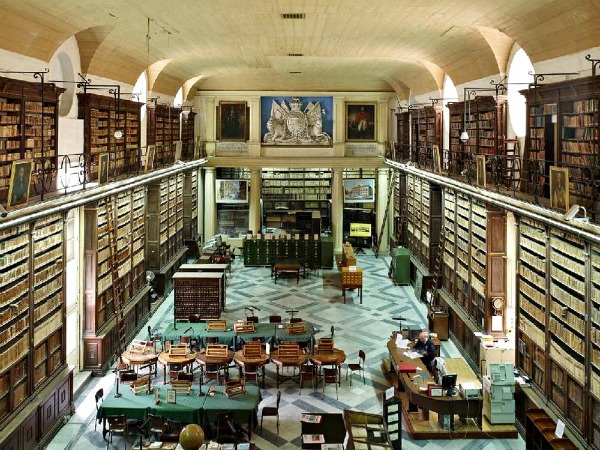


The national library in Valetta (photo credit: the maltina)
Since then I have made it a mission to go to the libraries in any city that I visit. The low cost printing, the free wifi, the interesting displays, and the interactions with locals has made each library visit very interesting. Wherever you are, check out the local library.

Public Library: Boston MA


Bibliotheque Nationale de Paris

Kings College Library, London

Views from the Library at ETH Zurich
Tuesday, January 8, 2019
City-Stops: Marseille, France
Today I just want to shout out one of my favourite places in the world: Marseille, France. In many ways I grew up in Marseille- I moved here when I began my PhD at the age of 26 and overall I lived in the city for over 2 years. It was first time finding my own place, learning a new language, and building a new network. All of these experiences and the friends that I made in Marseille had a great impact on my views and my life. Anytime someone asked where I would live in the world if I was free to choose I always say Marseille (sorry Drake City). I hope after reading this, you would at least feel like it's worth a visit.
There are a few about Marseille that everyone should know. First of all it has a lot of character. It is dirty, has a lot of rats, and has a bad reputation with regard to crime (for France which to me is still soft). But, these negative things strangely serve to enhance it's character because they lower your expectations and thus when you experience the beauty of the city, you tend to appreciate it more. Marseille is located on the coast of the Mediterranean, but it does not the allure of a vacation destination (although it would be a sick one). Instead it feels like a bunch of different cities and experiences built into one.

First of all there is the diversity in marseille. It is a port city, so people in marseille have origins from all over the world from Asia to the Caribbean. This means there is lots of good food, and you never really feel like an outsider because everyone kind of is. You can find grocery stores that carry most ingredients and restaurants serving all different kinds of cuisine. The music and art scene is very diverse as is the types of industries. You can pretty much find every scene that you want in Marseille.


Second there is the cityscape and landscape. Marseille is a city with many different faces. Some areas like cours julien or La friche have a distinct urban feel like brooklyn and some areas have a cool coastal and beach feel like pointe rouge. You can get a caribbean sense rolling through vallon des auffes on the Corniche, or an old euro experience strolling through le panier. The even have a big commerical centre called terrasse du port with a view out to the ocean. Not to mention there are tons of outdoor activities not far away. You can find sick mountain biking (VTT) trails and also areas where you can to cliff dive into the ocean (jump). Also there are concert halls, tons of cool museums, sporting arenas, and concert venues.


Lastly, and like you might have expected, the people in marseille are what has made it in my opinion one of the best places to live. Because of the diversity in industry so many people you encounter in marseille have different journeys and are on many different paths. Many people are just passing through marseille and are there temporarily for work, for an internship, or for school. This shared experience makes bonding with others very easy and people are very open to it. Local people in marseille also understand that you are a visitor, and are happy to invite you into their circles even knowing your stay will be temporary. This is what was so cool about Marseille. Add it to your bucket list.


There are a few about Marseille that everyone should know. First of all it has a lot of character. It is dirty, has a lot of rats, and has a bad reputation with regard to crime (for France which to me is still soft). But, these negative things strangely serve to enhance it's character because they lower your expectations and thus when you experience the beauty of the city, you tend to appreciate it more. Marseille is located on the coast of the Mediterranean, but it does not the allure of a vacation destination (although it would be a sick one). Instead it feels like a bunch of different cities and experiences built into one.

First of all there is the diversity in marseille. It is a port city, so people in marseille have origins from all over the world from Asia to the Caribbean. This means there is lots of good food, and you never really feel like an outsider because everyone kind of is. You can find grocery stores that carry most ingredients and restaurants serving all different kinds of cuisine. The music and art scene is very diverse as is the types of industries. You can pretty much find every scene that you want in Marseille.


Lastly, and like you might have expected, the people in marseille are what has made it in my opinion one of the best places to live. Because of the diversity in industry so many people you encounter in marseille have different journeys and are on many different paths. Many people are just passing through marseille and are there temporarily for work, for an internship, or for school. This shared experience makes bonding with others very easy and people are very open to it. Local people in marseille also understand that you are a visitor, and are happy to invite you into their circles even knowing your stay will be temporary. This is what was so cool about Marseille. Add it to your bucket list.


Monday, January 7, 2019
Why transitions are hard
"Leaving is the hardest thing to do, but being left is harder, yes it's true" from To Ü - Scrillex and Diplo ft. AlunaGeorge
Transitions are tough. Whether it be changing schools, jobs, relationships, cities, or countries. Part of the difficulty is that no change happens in isolation. For example, moving to a new city could also mean changing jobs and leaving old relationships behind. With every transition there is excitement and the opportunity to meet new people and learn new things. While I am a big fan of being pushed outside of my comfort zone, transitions have always been difficult. I imagine that they are difficult for almost everyone, especially the many people who did not make their transitions by choice.
Personally, I have been fortunate enough to have only had to make moves as a result of favourable circumstances (changing schools, moving to a new country for graduate work, and moving to a new city for a job). With this in mind, the number one thing that makes transitions hard is facing the after-effects of the change. Moving on requires us to acknowledge that things won't be as we left them. The people, the places, the relationships, almost everything we know and love will change. We will change too. When something is changing with you, you hardly notice, because these changes happen gradually. However the before and after type realizations that you see when you are away for a while can be shocking. For me, this is the thing I find most difficult about transitions. That is, knowing that what/who I left will definitely change. Oddly, it is also the thing that makes these transitions so cool. I can't wait to see how things will be different.

Sunday, January 6, 2019
Comprehensive Exam Strategy of Ph.D students
Comprehensive Examinations Strategy Guide:
The comprehensive exam (comps) is one of the most challenging part of the Ph.D. The goal of the comprehensive exam is often to have the student develop a depth of knowledge with regard to their research topic and a breadth of knowledge with regard to their field. It takes many forms and the requirements for a successful completion varies widely. At the University of Toronto for example, the process and evaluation procedure are different for each department. Some departments even have no comprehensive exam what so ever (lucky), but they have qualifying exams (same thing).
With that said, I believe the strategy outlined below could help those who are feeling hesitant when starting their own comps or are feeling overwhelmed when looking at all the work ahead. Importantly, this strategy will also help beyond the completion of your comprehensive exams when writing research articles and developing research oriented or topic presentations.
Regardless of the format of your comps, if it requires reading and synthesizing a bunch of research articles, texts you will find this method useful.
Start Reading and Make Notes Right Away.
First of all, I was not a good note taker before my comps, and I still would not consider myself a good note taker. However, I am constantly practicing and getting better at it. I decided to make notes after reading through this article 3 times and not remembering a thing when asked to talk about it after the first day of my comps process. That was my wake up call. Through some research on note-taking methods, and discussions with colleagues, I developed the strategy described below.
The Note Taking Process
- Start Reading and take notes as you read. Highlight the important points and try to make a skeleton of the information presented. This is particularly useful for introduction and discussion sections of research articles.
- Make your notes complete (or complete-ish) sentences and highlight important details in the article or text
Below is an example for how this was done for the introduction of Coello and Magne, 2000

- For research articles and texts: note, highlight, or even redraw key figures. Write your own description underneath.
- Below is an example of what this looks like for Rozzi et al., 2008

- Here is what this looks like for a textbook section

- Make your notes as detailed as possible at this point. The goal is to create something that you can understand later without re-reading the article, be creative with it and personalize it to your style.
The Studying process:
Once you make notes, and get the ideas out of the articles and texts and unto page(s). The crucial step of getting these ideas from the page into your head begins. For this step, you could just reread your notes a bunch of times, but I found that actively working with the material was a more effective way making me remember what I read about. Studying this way also had a bonus effect that is detailed below.
Create a Summary
**Note** This is by far the most useful thing I did for my comprehensive examination preparation.
- Once you have your notes, the next thing to do is create a well written summary of the article or text you have read. To do this, read over your notes on each section and draft a summary of the article. Include key details and observations you have noted in the summary that may not be present in the abstract. Write the summary as if you are writing it for a proposal or as background for a presentation.
Here is an example of a summary of Coello and Magne, 2000

Here is a summary of a textbook section

The practice of summarizing the article in your own words will help it stick in your memory, and these summaries will also come in handy when writing your own proposals and research articles in the future. Importantly, producing these summaries will also force you to write which is a skill you can never practice enough.
Create a Presentation
In the same way, for larger review papers and tougher material, I found it was also helpful to create a simple presentation outlining and explaining the concept. This presentation could be in the form of a lecture (for larger text book readings and reviews) or a simple 10-minute research presentation (for tough research articles). I found that this method helped me realize what topics I didn't know as well and what I should focus on studying. Also this practice and left me with a bunch of presentations and outlines I could pull from when required to for lab meetings and even when planning lectures for classes.
The Synthesizing Process
Once you have mostly learned all the individual pieces of information, it is important to synthesize and look for contrasts between groups of literature. This will help you develop a feel for the state of the literature in the field and with regard to your topic of interest. It is important however to do this in the way your will be evaluated.
Practice How You Are Going to Be Tested
For my comprehensive exams, I was required to write three, 10 page papers in 10 days based on a question from each of my 4 committee members. So for the last month or so of my comps, I practiced writing papers based on questions I gave myself. This was tough. It was a grind, and it was hard to even think about doing it. I lost motivation the first time I tried, but I was glad that I tried. When it came to the real thing, and I actually got the questions I was able to at least finish the answers. If you know how you will be evaluated- fortify yourself and practice that way. You never want to run your 10K on race day.
Create a Topic Lecture (I wish I did more of these)
I had the idea of creating a lecture for each theme covered in my comprehensive examinations. There were 4 global themes and I was able to spend some time making one of them into a lecture. I wish I had done this for all 4 because the one theme I actually did it for became the easiest theme to write about.
Overall thoughts
The comprehensive exam process was tough, but I am glad I finished it. In the end I was left with this knowledge to share with others and a whole bunch of notes and summaries I later used to write my thesis. For those of you wondering how I organized this, I used a tool called evernote. I attached the article, wrote notes and then did the summary in the same note. Here is what it looks like. It was easy for me to look for articles by keyword and find what I needed to. I do think you should choose and organizational tool that works for you.
Good luck y'all :-)
Saturday, January 5, 2019
Writing Everyday Blog Post
My goal this year is to write everyday. I am going to do this for myself and myself only. One of the best ways I thought to do so was to start a blog (or continue my dead blog). I have no idea what I will write about or who will read it or where the ideas will come from. I hope all of the following will come about organically. Just in case you were wondering whose thoughts these were. I am sure you will be able to figure it out by the content. I will myself remain semi-anonymous. There are many reasons for this. Mostly because I don't know what this will be so I will play it cautiously. I have thought about it though. For example, if people read this and feel inspired - I don't want my identity to conflate their inspirations. Or, if people read this and feel disgusted - I don't want the source of their disgusts to have a face. Also, if people do NOT read this, then I happen to write something worth reading in the future then I don't want this to affect their perceptions of my future work. If people DO read this, and I happen to not write anything in the future (hopefully unlikely), then I don't want them to search for what happened to me. Most of all, because my gut tells me to.
To beginnings, both old and new.
Subscribe to:
Posts (Atom)